- Home
- News
- Guidelines for Choosing Children’s Bathrobes: A Comprehensive Analysis of Materials, Safety, and Comfort
Guidelines for Choosing Children’s Bathrobes: A Comprehensive Analysis of Materials, Safety, and Comfort
As the weather cools down, children’s bathrobes have become the focus of attention for parents. Choosing a suitable children’s bathrobe not only provides a warm and comfortable bathing experience for children, but also effectively prevents colds and ensures their health. This article will provide you with a comprehensive purchasing guide from multiple dimensions such as material selection, safety standards, and brand recommendations.
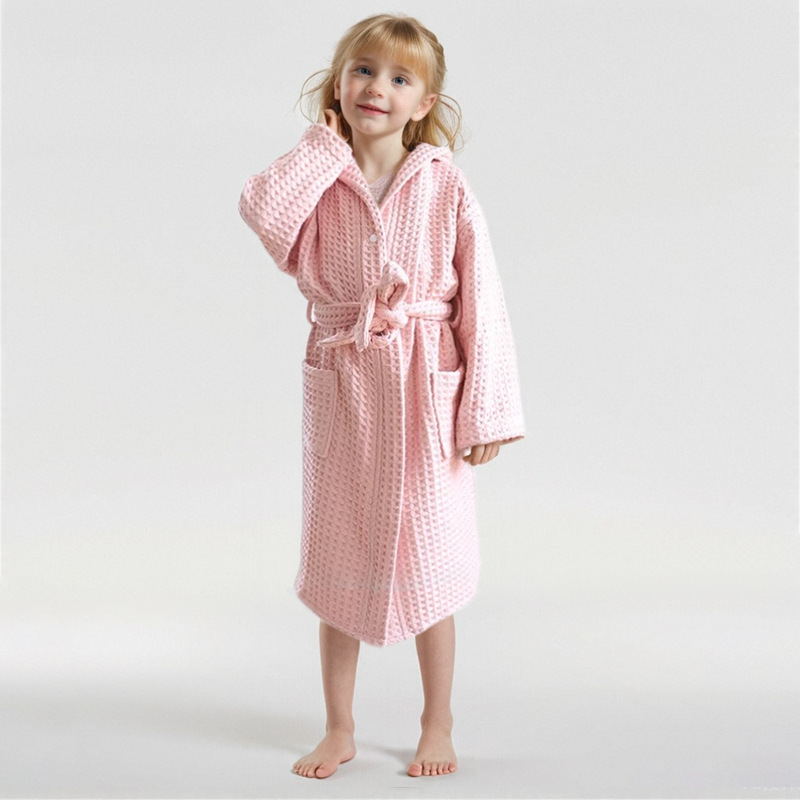
1、Material selection: Pure cotton, coral fleece, bamboo fiber each have their own advantages
Pure cotton material is the most common choice, loved by consumers due to its natural properties and excellent water absorption ability. The pure cotton fiber structure is filled with small pores that can quickly absorb a large amount of water, and it is soft and skin friendly, suitable for people with sensitive skin. After multiple washes, it can still maintain its water absorption performance and has good durability.
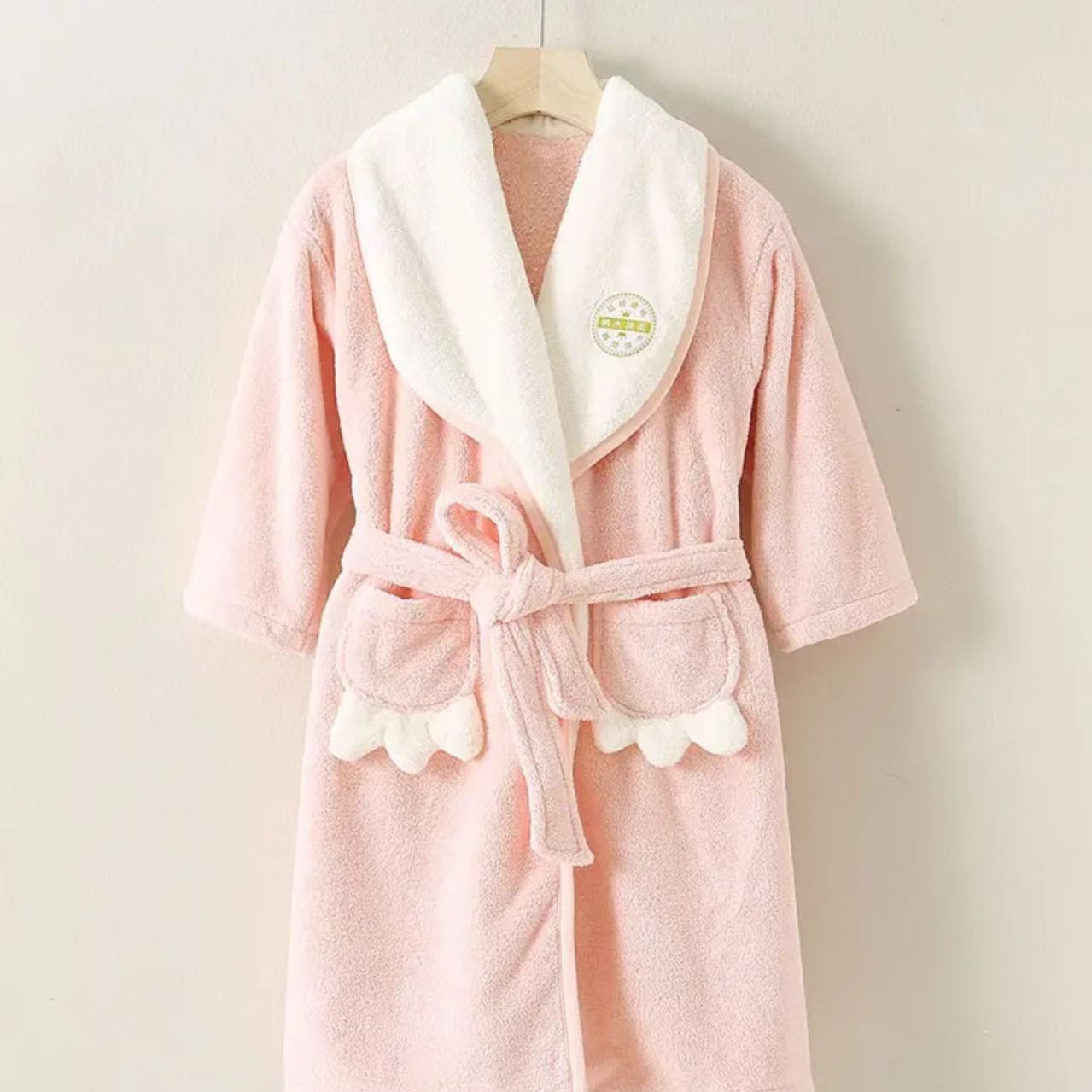
Coral fleece material has a soft and delicate touch, and the plush texture makes people feel particularly warm, making it very suitable for use in autumn and winter. Its water absorption performance is also good, which can quickly absorb moisture and keep children’s bodies dry. In addition, coral fleece material also has the advantages of not easily shedding hair and not easily deforming.
Bamboo fiber material is a popular new environmentally friendly material in recent years, which has attracted attention for its natural antibacterial properties and excellent water absorption ability. It has good breathability and capillary action, with moisture absorption about 40% higher than ordinary cotton, soft and lightweight texture, smoother touch than pure cotton, and faster drying speed. It is an ideal material suitable for use in humid and hot environments.
2、Safety standard: A-class certification is a mandatory requirement
According to the national mandatory standard GB 31701-2015 “Technical Specification for Safety of Textile Products for Infants, Young Children and Children“, children’s bathrobes must meet strict safety requirements. The safety technical requirements for infant and children’s textile products in this standard are divided into three categories: A, B, and C. Infant and child textile products should meet Class A requirements, and children’s textile products that come into direct contact with the skin should meet at least Class B requirements.
The standard has specially added limit requirements for six plasticizers and two heavy metals, lead and cadmium. Detailed regulations have been made for different parts of children’s clothing such as the head, neck, shoulders, and waist, requiring that no ropes be allowed in the head and neck of clothing for infants, young children, and children under 7 years old. Meanwhile, the attachment should have a certain tensile strength and should not have sharp tips or edges.
3、Design points: Hood, pocket, and size are all indispensable
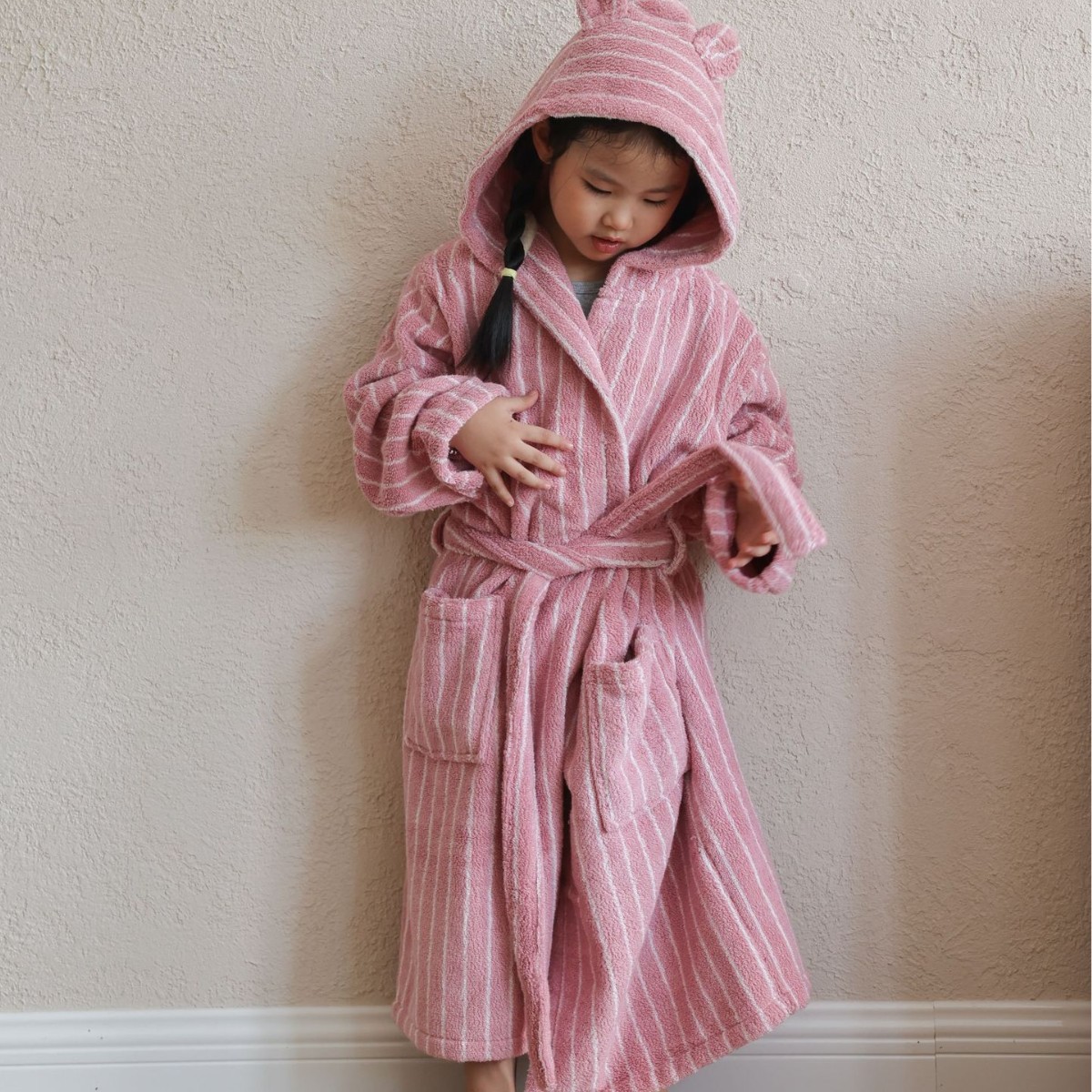
The hooded design is an important feature of children’s bathrobes. A hooded bathrobe can better protect a child’s head and neck, avoiding catching a cold. The design of hats can also increase the fun of bathrobes and make children enjoy wearing them more. For example, using a large hood design not only makes it super cute and adorable, but also wraps around the baby’s head, allowing hair to dry quickly.
Pocket design is equally practical. Some bathrobes are designed with pockets for children to place small toys or bath products while taking a shower, as well as for children to intervene while wearing the bathrobe to increase warmth. The position and size of the pockets should be reasonable, not affecting the overall appearance of the bathrobe, but also convenient to use.
Size selection is crucial. The size of a children’s bathrobe should be chosen according to the child’s age and height, neither too big nor too small is suitable. A bathrobe that is too large may affect a child’s activities, while a bathrobe that is too small may not provide good warmth and wrap around the child’s body. Generally speaking, the length of the bathrobe should be able to cover the child’s knees and above, and the length of the sleeves should be moderate, not too long or too short.
4、Selection suggestion: Considering multiple factors comprehensively
When choosing children’s bathrobes, it is recommended that parents consider the following aspects comprehensively:
Material selection: Choose the appropriate material based on the season and the child’s skin type. In summer, you can choose lightweight and breathable gauze bathrobes or pure cotton bathrobes; In winter, choose coral fleece bathrobes or thick cotton bathrobes with good warmth retention; Choose a bathrobe of moderate thickness according to the actual temperature in spring and autumn.
Safety certification: It is necessary to check whether the product has passed relevant safety certifications, such as Class A infant and toddler standard testing, to ensure that the product does not contain harmful substances and is harmless to children’s skin.
Craftsmanship quality: Good children’s bathrobes are finely crafted, with neat stitching and no loose threads or flaws. The seams of the collar, cuffs, hem, and other parts are firmly sewn and not easily detached. You can check whether the zipper or button of the bathrobe is smooth and secure to avoid problems during use.
Style design: There are various styles of children’s bathrobes, including cute animal shapes, cartoon patterns, etc. You can choose the style that children like according to their preferences, so that they are more willing to wear bathrobes after taking a shower.
5、Usage and maintenance: Extend service life
It is recommended to clean children’s bathrobes after each use to maintain cleanliness and hygiene. If the frequency of use is not high, it can also be cleaned every 2-3 days. Most children’s bathrobes can be washed in a washing machine, but it is important to choose a gentle mode and use mild detergents. Avoid using bleach and softeners to avoid affecting the water absorption and softness of the bathrobes.
When taking care of children’s bathrobes, it is important to avoid direct sunlight to prevent color fading. At the same time, it is important to keep the bathrobe dry and avoid mold growth in humid environments. If the bathrobe has pilling or deformation, you can use scissors to cut off the pilling part and make appropriate adjustments.
Conclusion
Choosing a suitable children’s bathrobe can not only provide a warm and comfortable bathing experience for children, but also cultivate their independence and confidence. By considering various factors such as material, safety, design, and brand, parents can choose bathrobes that are both beautiful and practical for their children, allowing them to feel thoughtful care even in the cold season. Remember, the health and safety of children always come first. Only by choosing high-quality products that meet national standards can children wash and wear with peace of mind.